 Tuck
Start with small, steady habits
Distance is hardest on the in-between moments. You miss the small stuff: the face your person makes at lunch, the odd thing they saw on the way home. Most of what helps is putting a little of that back, often, in ways that do not take much energy.
- A set time to talk. Pick a time that works in both of your days and time zones, and keep it. A short call you can count on beats a long one that keeps getting moved.
- Small things in between. A photo of your coffee, a quick doodle, a heart. Little gestures that can be opened whenever fit around work and sleep better than one long call every night, which can start to feel like a shift you have to clock in for.
- Real mail. A postcard or a letter takes days to arrive, and that is part of the point. It is something they can hold and keep.
Rituals that make the distance smaller
Rituals give you something shared even when you are not in the same room.
- Do the same thing apart. Watch the same episode, cook the same recipe, or read the same book a chapter at a time, then talk about it.
- Plan the next visit before this one ends. Knowing when you will see each other turns "I miss you" into "eleven more days". A countdown until you see each other keeps that number in front of you.
- Keep a running thread. An inside joke, a daily photo of the sky, a drawing game you trade back and forth. If you need a place to start, here are things to draw for your partner.
Do not keep score
It is easy to start counting when you are apart: who called last, who texted more, who made the longer trip. Try not to. Some weeks one of you has more to give, and some weeks the other does. If an app shows how many days in a row you have traded notes, enjoy it, but do not let it turn into a test. A missed day is just a busy day.
It also helps to say what you need out loud. "I would love a call before bed tonight" is easier on both of you than waiting to see if they guess.
Living apart is not only about miles
Not every couple who lives apart is long distance. Some live across town on opposite schedules. Some have one person away for work or school for a stretch. And some, like the person who made Tuck, are engaged and have decided not to live together until they are married. Jacob put it this way: "I wanted a way to leave her something small during the day: a doodle, a few words, a heart, right there on her phone."
Whether it is a few miles or a few time zones, the same small habits help.
What to look for in a couples app
You do not need an app to stay close. But if you want one for the in-between moments, a few things matter more than a long feature list.
- Low effort, every day. If sending something takes more than a few seconds, it will not happen on a busy weekday.
- It lands where they will see it. The best little note is one they notice without opening anything, on the home screen or lock screen.
- No sign-ups or ads in the way. Accounts, passwords and upsell screens are friction, and friction is what quietly ends a daily habit.
- Privacy you can understand. Look for a privacy page in plain words that says what is stored, where it is kept, and what is not collected.
- What it costs. Check whether the parts you would use every day sit behind a subscription.
- It works on both of your phones. An app only one of you can use is not a couples app. Check this first.
Where Tuck fits
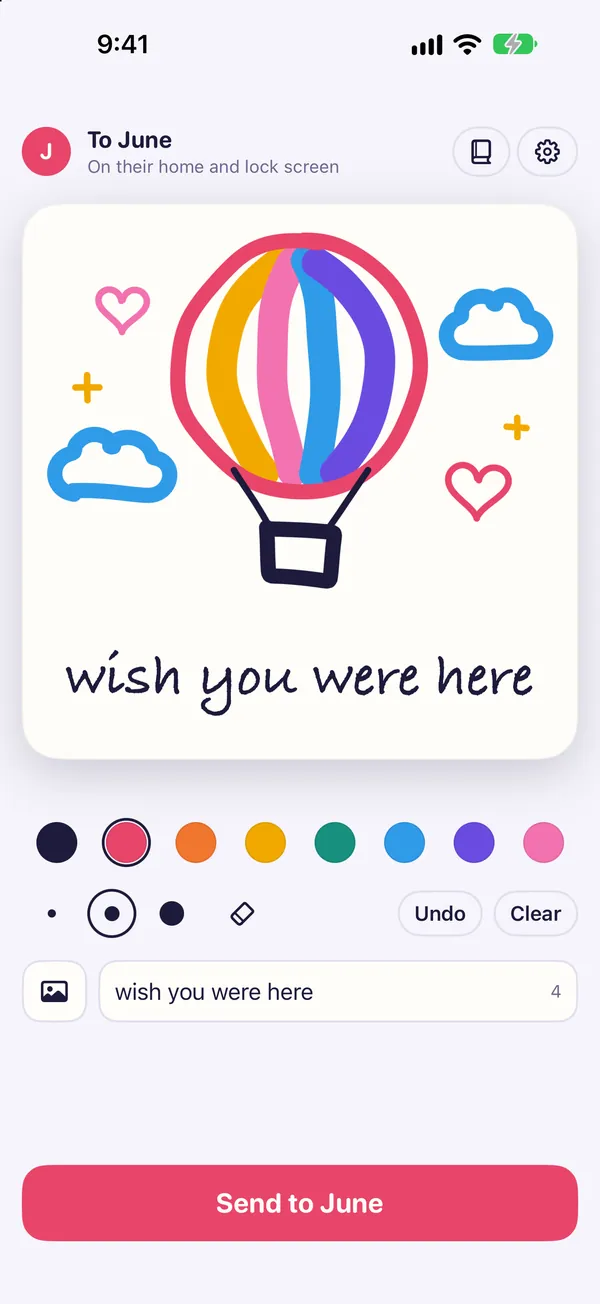
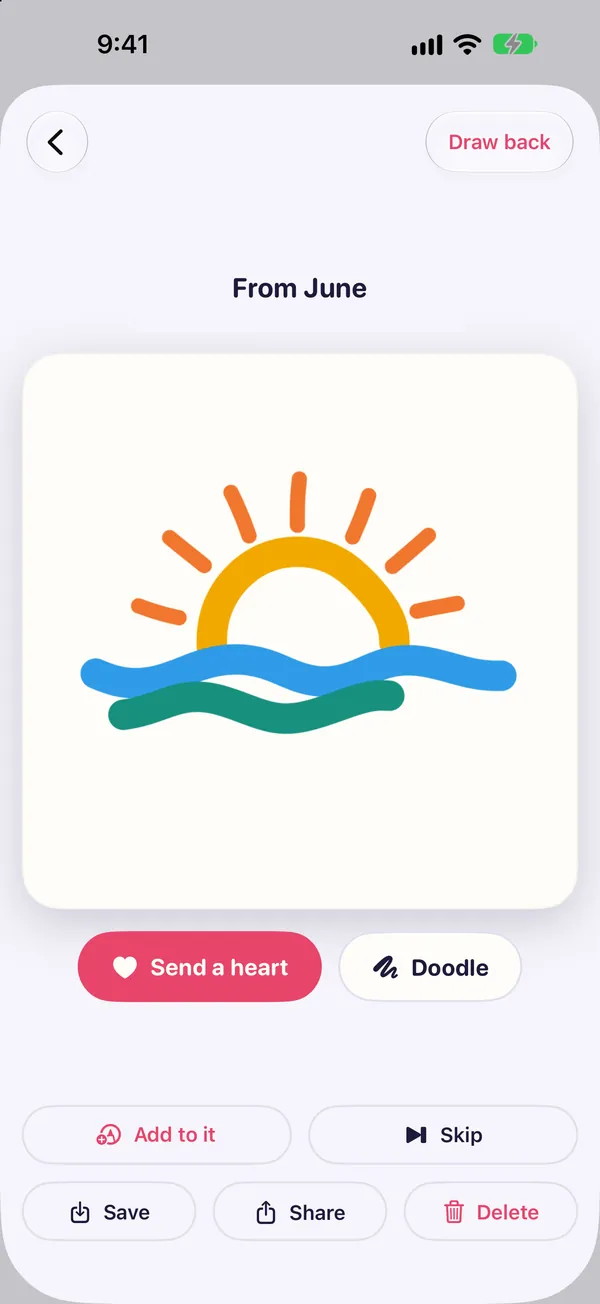
Tuck is one answer, made for two iPhones. You draw a little note on a square of paper, add a few words if you like, and send it. It lands on your person's home screen widget, their lock screen widget, and as a notification that shows the drawing. When they open it, the note draws itself stroke by stroke, the way you drew it. They can send a heart, doodle on your note and send it back, or draw back.
It is free, with no ads, no subscriptions and nothing to buy. Pairing is a link you send your person, with no account, password or email. The note itself is locked (encrypted) on your phone before it leaves, with a key that only your two phones hold. Some delivery details, like random IDs and when a note was made, are not locked, and the privacy page spells out exactly what is stored.
The honest limit: Tuck is iPhone only. Both of you need an iPhone on iOS 26 or later, and there is no Android or web version. If you both have one, the couples widget guide shows how to put notes on your screens.
Common questions
What is the best app for a long distance relationship?
The one you will both actually use every day. Look for something quick to send, that shows up where your person will see it, with no sign-ups or ads in the way and a privacy page you can read. If you both have iPhones, Tuck is one free option built around little drawn notes that land on the home screen and lock screen.
How do you stay close in a long distance relationship?
Small, steady things: a set time to talk, little messages or drawings in between, shared rituals like cooking the same meal apart, real mail now and then, and always knowing when the next visit is. Try not to keep score of who called or traveled more.
How often should long distance couples talk?
There is no right number. What helps is a rhythm you can both keep without dreading it. Often that means a short call you can count on plus small things during the day, rather than a long call every night that starts to feel like a chore.
Does Tuck work if one of us has an Android phone?
No. Tuck is iPhone only, and both of you need an iPhone on iOS 26 or later. There is no Android or web version.
Is Tuck free?
Yes. Tuck has no ads, no subscriptions and nothing to buy.